
In today’s fast-paced business environment, Agile methodologies like Scrum have become essential for teams aiming to enhance productivity and deliver value efficiently. However, the journey to effective Scrum implementation can be challenging. Private Scrum training offers a tailored approach that can significantly benefit organizations, regardless of their current Agile maturity. This article explores the value of private Scrum training, categorizing companies into four types and detailing the outcomes and stakeholders involved in this investment.
Understanding Your Company Type
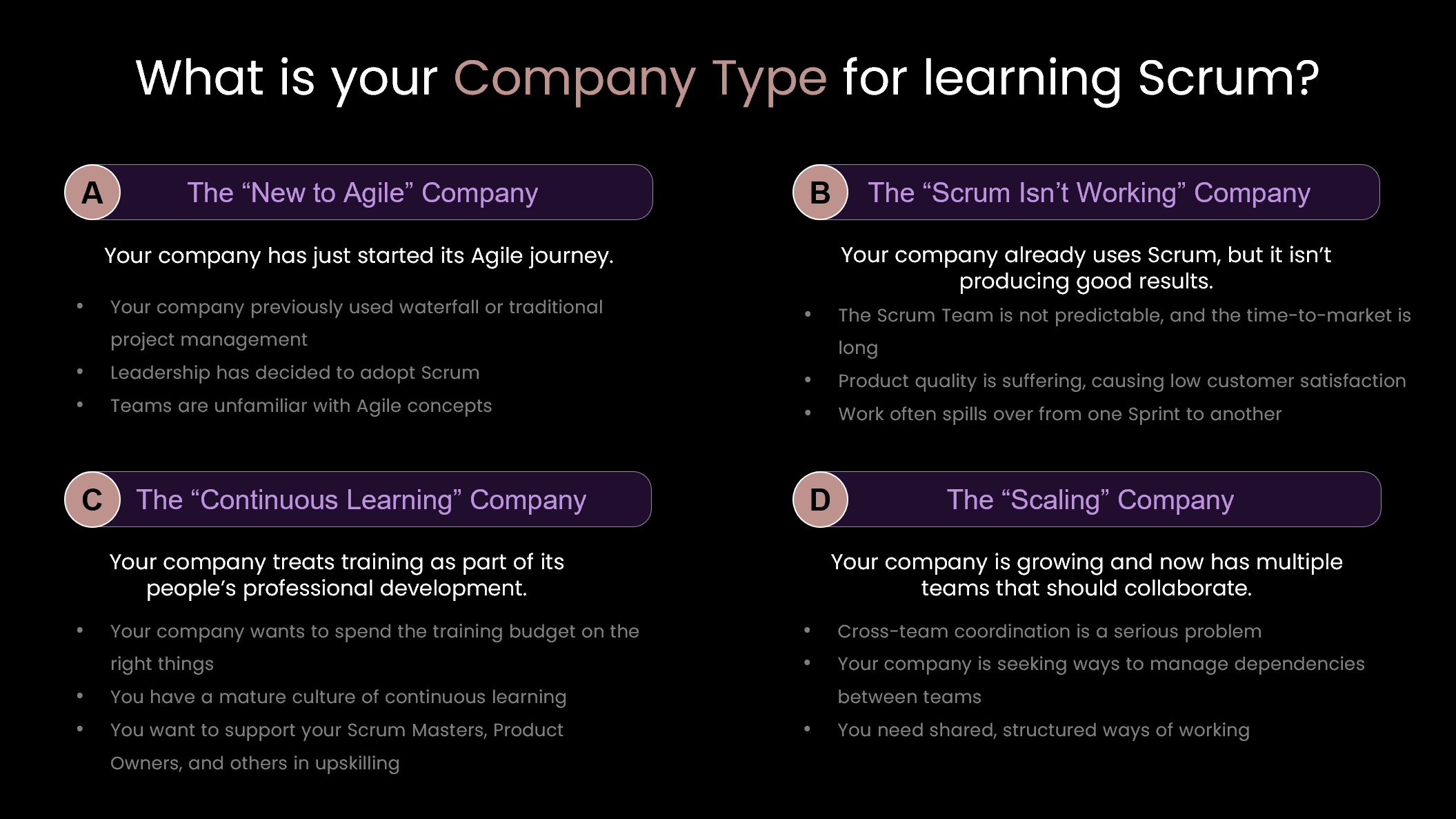
When considering private Scrum training, it’s crucial to identify which of the four types your company aligns with. Each type has distinct characteristics and needs that can be addressed through customized training.
Type A: The “New to Agile” Company
- Characteristics: Your organization is just beginning its Agile journey, having previously relied on traditional project management methods like Waterfall.
- Need for Training: Teams are unfamiliar with Agile concepts, and leadership is eager to adopt Scrum to improve project outcomes.
- Training Focus: Fundamental Agile principles, Scrum roles, and ceremonies.
Type B: The “Scrum Isn’t Working” Company
- Characteristics: Your organization has implemented Scrum but is not seeing the desired results.
- Symptoms: Teams struggle with predictability, long time-to-market, and declining product quality.
- Training Focus: Identifying and addressing common pitfalls in Scrum practices to enhance team performance.
Type C: The “Continuous Learning” Company
- Characteristics: Your organization values training as a key component of professional development and has a culture of continuous learning.
- Goal: To effectively utilize the training budget and support the upskilling of Scrum Masters and Product Owners.
- Training Focus: Advanced Scrum techniques and fostering a culture of collaboration.
Type D: The “Scaling” Company
- Characteristics: Your organization is experiencing growth and has multiple teams that need to work together effectively.
- Challenges: Cross-team coordination issues and managing dependencies.
- Training Focus: Strategies for scaling Scrum across teams and establishing structured ways of working.
Key Outcomes of Private Scrum Training
Investing in private Scrum training can yield significant benefits for your organization. Here are some of the most impactful outcomes:
1. Unified Scrum Understanding
When team members learn together, they develop a consistent understanding of Scrum principles and practices, which is crucial for effective collaboration.
2. Collective Commitment to Change
Training as a group fosters a sense of urgency and commitment to implementing changes, enhancing team dynamics and accountability.
3. Cost Efficiency
Private classes can be more cost-effective than sending individuals to public training sessions, maximizing your training budget.
4. Strengthened Team Identity
Learning together acts as a team-building exercise, reinforcing team identity and collaboration.
5. Customized Learning Experience
Training can be tailored to your company’s specific context, making the learning experience more relevant and impactful.
6. Catalyst for Scrum Adoption
Teams can start applying what they’ve learned immediately after training, accelerating the adoption of Scrum practices.
7. Collective Growth
Investing in the team as a whole builds collective capability and fosters a supportive learning environment.
8. Safe Space for Discussion
Private training creates a confidential environment where teams can openly discuss challenges without external pressures.
9. Immediate ROI
Learning side-by-side allows teams to apply Scrum concepts in real-time, leading to quicker and more substantial returns on investment.
Stakeholders in Private Scrum Training
Successful implementation of private Scrum training requires alignment among key stakeholders within the organization. Here are the three primary groups involved:
1. Scrum Masters / Agile Coaches / Product Owners
These individuals work directly with teams and can identify specific training needs based on their observations and experiences.
2. Operational Leads
Team Leads, Engineering Managers, and Heads of Product are focused on delivering predictable value and quality products. They often control the training budget and support initiatives that promise improvements in product development.
3. Executives
CEOs, COOs, CTOs, and CPOs are concerned with strategic outcomes. Their support is crucial for any training initiative that demonstrates clear value to the organization.
Conclusion: Investing in Your Team's Future
Private Scrum training is not just a learning opportunity; it’s a strategic investment in your team’s future. By understanding your company’s current state and aligning key stakeholders, you can effectively leverage Scrum training to enhance team performance, foster collaboration, and ultimately drive business success.
If you’re an Agile Leader looking to support your Scrum Teams, consider exploring private Scrum training tailored to your organization’s unique needs. This investment can transform your team dynamics and set the stage for sustained growth and improvement.
For further insights, download our free PDF guide on private Scrum training for companies here.


%22%2F%3E%0A%20%20%3Crect%20width%3D%221200%22%20height%3D%22675%22%20fill%3D%22url(%23grid)%22%2F%3E%0A%20%20%3Crect%20width%3D%221200%22%20height%3D%22675%22%20fill%3D%22url(%23shine)%22%2F%3E%0A%20%20%3Cg%20opacity%3D%220.18%22%20fill%3D%22%23b6b6b6%22%3E%0A%20%20%20%20%3Ccircle%20cx%3D%221020%22%20cy%3D%2296%22%20r%3D%22142%22%2F%3E%0A%20%20%20%20%3Ccircle%20cx%3D%221120%22%20cy%3D%22202%22%20r%3D%2296%22%2F%3E%0A%20%20%20%20%3Ccircle%20cx%3D%22168%22%20cy%3D%22560%22%20r%3D%22120%22%2F%3E%0A%20%20%3C%2Fg%3E%0A%20%20%3Crect%20x%3D%22185%22%20y%3D%22152%22%20rx%3D%2234%22%20width%3D%22830%22%20height%3D%22372%22%20fill%3D%22%23060606%22%20fill-opacity%3D%220.24%22%20stroke%3D%22%23ffffff%22%20stroke-opacity%3D%220.26%22%2F%3E%0A%20%20%3Crect%20x%3D%22214%22%20y%3D%22188%22%20rx%3D%2218%22%20width%3D%22270%22%20height%3D%2244%22%20fill%3D%22%23ffffff%22%20fill-opacity%3D%220.16%22%2F%3E%0A%20%20%3Ctext%20x%3D%22349%22%20y%3D%22217%22%20fill%3D%22%23ffffff%22%20text-anchor%3D%22middle%22%20font-size%3D%2221%22%20font-family%3D%22system-ui%2C%20-apple-system%2C%20Segoe%20UI%2C%20sans-serif%22%20letter-spacing%3D%221.7%22%3EDEEPTAL%20INSIGHT%3C%2Ftext%3E%0A%20%20%3Ctext%20fill%3D%22%23ffffff%22%20font-size%3D%2262%22%20font-weight%3D%22700%22%20font-family%3D%22system-ui%2C%20-apple-system%2C%20Segoe%20UI%2C%20sans-serif%22%3E%3Ctspan%20x%3D%22600%22%20y%3D%22345%22%20text-anchor%3D%22middle%22%3ECommunication%3C%2Ftspan%3E%3C%2Ftext%3E%0A%3C%2Fsvg%3E)